Review: There’s a Blessing in the Storm
As an embroidery designer who spends hours scrutinizing digitized files for stitch quality, visual balance, and market viability, I approach every new download with a mix of optimism and skepticism. We have all seen designs that look perfect on a screen but fail miserably when pushed through the needle. Today, I am evaluating There s a Blessing in the Storm, a design currently categorized under T-Shirt Designs and Graphics. While the categorization suggests a simple graphic transfer, my goal is to determine if this file holds up as a serious machine embroidery design for real-world applications, from boutique merchandise to heartfelt personalized gifts.
First Impressions and Visual Personality
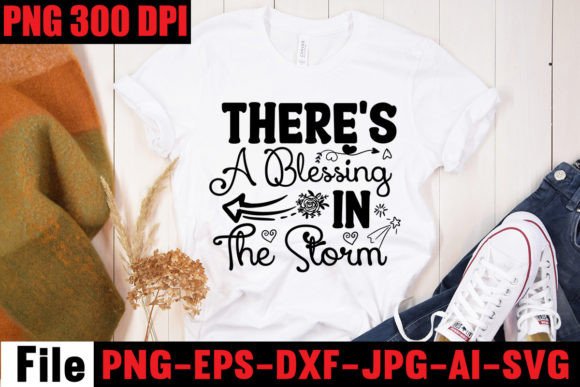
The title alone sets a specific emotional tone. In the world of handmade products, emotional resonance is often just as important as technical execution. There s a Blessing in the Storm immediately evokes feelings of resilience, comfort, and hope. Visually, the layout appears to balance typography with symbolic imagery, likely incorporating elements that suggest weather patterns or shelter without being overly literal. For a designer, this is crucial; the design needs to read clearly even when stitched in thread, which has less resolution than digital ink.
The mood is calm yet powerful. It does not scream for attention but rather invites the viewer to pause. This makes it an excellent candidate for projects where the message matters more than flashy aesthetics. When I first opened the preview, I noted that the spacing between letters and graphical elements feels open enough to allow for proper stitch definition, avoiding that muddy, overcrowded look that plagues many low-quality digitizations.
Real-World Application: The Boutique Scenario
To truly test a design, you have to imagine it on a finished product. Let’s consider a practical scenario: preparing inventory for a local craft fair or an Etsy shop specializing in mental health awareness or winter holiday gifts. I envision taking There s a Blessing in the Storm and applying it to a high-quality cotton canvas tote bag or a soft, heavyweight sweatshirt.
If placed on a neutral-colored tote bag, the design would serve as a daily reminder for the user. The contrast between the fabric texture and the smooth threads of the embroidery would enhance the tactile experience. Customers browsing a booth are drawn to items that feel substantial. A well-executed embroidered patch or chest logo on a sweatshirt can elevate a basic garment into a premium handmade product. The phrase works beautifully for baby embroidery projects as well, perhaps on a muslin blanket or a onesie, offering parents a sense of comfort during challenging times.
Furthermore, this design fits naturally into the category of holiday embroidery. As we move toward colder months, themes of finding light in darkness become increasingly popular. A kitchen towel or tea towel featuring this design could be a thoughtful gift for someone who has recently gone through a hard time. The durability of embroidery ensures that this message remains visible and intact through countless washes, unlike printed graphics that may crack or fade.
Technical Performance and Stitch Quality
When reviewing any embroidery file, I always look at how different stitch types interact. A successful design typically utilizes a combination of satin stitch for outlines and lettering, fill stitch for larger solid areas, and running stitch for delicate details. Based on the structure of There s a Blessing in the Storm, it appears to rely heavily on clear typography supported by graphic accents.
This requires careful attention to stitch density. If the fill areas are too dense, the fabric will pucker and the hoop marks will be difficult to remove. Conversely, if they are too sparse, the backing material might show through, ruining the professional finish. For small business owners, consistency is key. You want every unit you produce to look identical. This design seems stable enough to maintain its shape across multiple runs, provided the correct stabilizer is used.
I also considered how it translates to different materials. On a structured cap or hat, the curvature presents a challenge. Designs with long vertical lines or sharp corners can distort on curved surfaces. However, the balanced composition of this file suggests it should hold up well on a front panel of a baseball cap or a beanie. The visual weight is distributed in a way that accommodates natural fabric tension.
Where Caution Is Required
While the design has strong potential, there are specific scenarios where it requires careful handling. First, avoid using this on thin or highly stretchy fabrics without adequate stabilization. Thin rayon or lightweight jersey can lead to puckering, especially if the design contains large areas of fill stitch. Similarly, textured fabrics like heavy bouclé wool may hide the finer details of the embroidery, making the design appear muddied.
Another area to watch is small detail work. If the original vector includes tiny decorative accents or very fine lettering, these elements may not reproduce well in smaller hoop sizes. Embroidery machines have physical limitations; a line that looks crisp on a monitor might disappear entirely when stitched at half scale. Always inspect small details before committing to a production run.
File Formats and Digital Assets
The product description indicates that this is a digital download containing one .zip file. It includes an SVG file for Cricut, a DXF file for Silhouette, an EPS vector file, and a PNG file with a transparent background at 300 DPI. This variety is advantageous for designers who need versatility.
The inclusion of vector formats (SVG, DXF, EPS) means you can scale the design to any size for cutting vinyl or creating large-scale prints if you choose to offer hybrid products. The PNG file is particularly useful for creating printable mockups. As an Etsy seller, high-quality previews are essential for driving sales. You can place the transparent PNG over images of t-shirts, hoodies, or tote bags to showcase how There s a Blessing in the Storm looks in context without needing to photograph every single item.
However, it is important to note that while these formats are great for planning and mockups, you must verify if the included files are optimized for direct machine embroidery. Some SVGs require conversion or tracing in embroidery software to ensure proper stitch types are assigned. Always test the file in your specific digitizing software before mass production.
Practical Designer Notes for Success
Before adding this design to your catalog or personal collection, I recommend following a few best practices to ensure a professional result:
- Test on Scrap Fabric: Never run a new design directly onto your final product. Use scrap pieces of the same fabric and thread colors to check for tension issues and color contrast.
- Check Thread Contrast: Ensure the thread colors chosen provide enough contrast against the fabric. Low contrast can make the design illegible, especially in shadowed areas.
- Verify Hoop Size: Confirm that the design dimensions fit comfortably within your machine’s standard hoop sizes to avoid awkward re-hooping or trimming.
- Use Proper Stabilizer: Match the stabilizer type (cut-away, tear-away, or water-soluble) to the fabric weight. Heavy fabrics often require cut-away stabilizers for long-term durability.
- Black and White Mockups: View the design in grayscale to ensure the visual hierarchy remains clear without the distraction of color.
- Confirm Licensing: Before selling finished items or digital products, review the license terms associated with the download. Ensure you have commercial rights if you plan to use this in your craft business.
Final Verdict
There s a Blessing in the Storm is a thoughtful, emotionally resonant design that offers strong potential for both personal projects and commercial ventures. Its clean layout and meaningful message make it suitable for a wide range of products, from custom apparel and embroidered patches to nursery decor and holiday gifts. By paying attention to fabric selection, stitch density, and proper stabilization, designers can create finished products that not only look professional but also connect deeply with customers. For those looking to add a touch of inspiration to their handmade product line, this design asset is a worthy addition.